
Pool Shapes Explained: Kidney, Lap, Cocktail, and More
Kidney, lap, cocktail, zero entry, and freeform pool shapes compared: what each costs relative to a standard rectangle, and which yards each one suits.
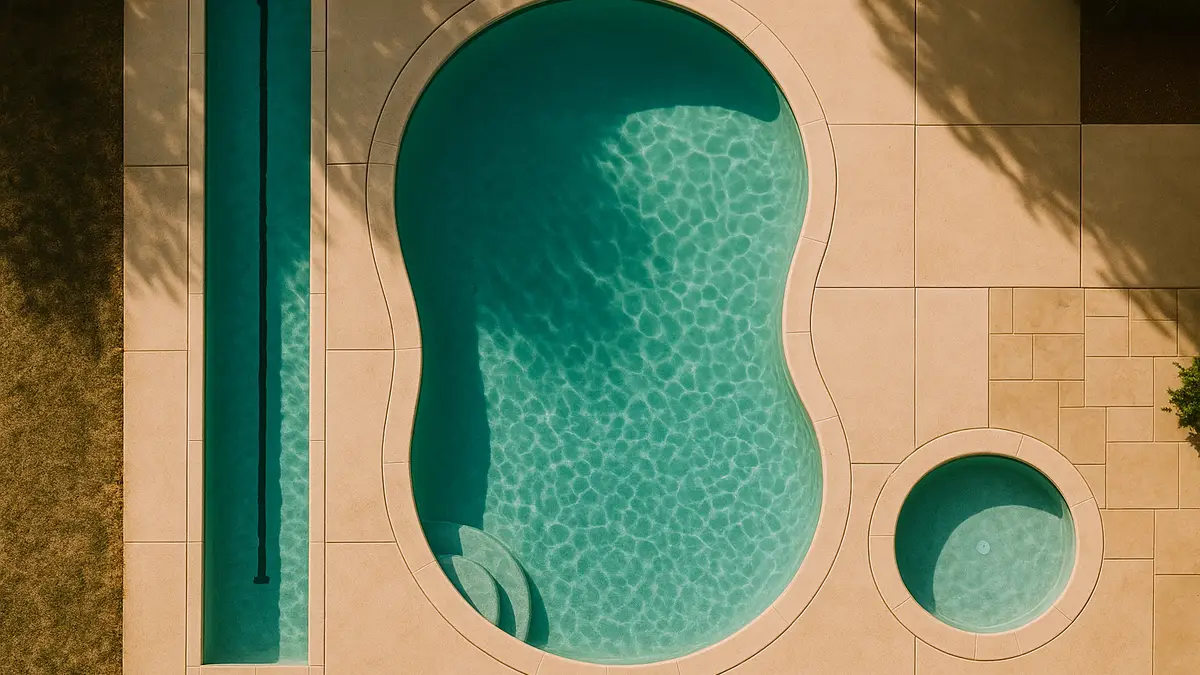
Pool shape decides more than looks. It decides which construction type you can use, how much the build costs relative to a plain rectangle, and how the pool actually gets used day to day. Here’s what each common shape means and what it typically costs to build.
What pool shapes are available?
Shapes split into three practical tiers: standard geometric shapes that any construction type can build, curved and freeform shapes that generally require gunite, and specialty layouts built around a specific use case rather than a silhouette.
Standard shapes (no cost premium)
Rectangle and square pools are the baseline, the cheapest shape to build in any construction type (vinyl, fiberglass, or gunite) because straight walls and simple forms are the fastest to build. Who this is NOT for: anyone wanting a strong visual centerpiece in a curved or informal yard, where a straight-edged pool can look out of place.
Oval pools soften a rectangle’s corners without adding real cost, and they’re widely available as an above-ground option as well as inground. Who this is NOT for: buyers set on a truly custom or asymmetrical look, since oval is still a fixed, symmetrical geometric shape.
Curved and freeform shapes (typically +10-20%)
Kidney pools take their name from the curved, asymmetrical bean shape, wider at one end and narrower at the other with a curved indent along one side. They typically cost 10 to 20 percent more than a same-size rectangle because the curved walls require gunite construction, formed and shaped on site rather than built from straight prefabricated panels. Who this is NOT for: buyers wanting a fiberglass or vinyl build, since true kidney curves generally aren’t available in those construction types.
Freeform pools go further than kidney, with irregular, organic curves designed to look natural rather than geometric. Cost runs similar to or slightly above kidney, in the 10 to 20 percent range over a rectangle, and freeform is almost always a gunite project for the same reason: curves need on-site shaping. Who this is NOT for: budget-focused buyers, since freeform’s design flexibility is the whole point and comes at gunite’s higher baseline cost, covered in our gunite and concrete pool guide.
Lagoon pools are a softer version of freeform, with wide, sweeping curves and often a beach or zero-entry edge built in. Cost and construction requirements track closely with freeform.
Specialty shapes (built around a use case)
Lap pools are long and narrow, built specifically for swimming continuous laps rather than lounging, often 40 to 75 feet long but only 8 to 10 feet wide. Because they use less total surface area than a same-length rectangle pool, cost per square foot can run comparable to or even below a standard rectangle, despite the specialized purpose. Who this is NOT for: households prioritizing group lounging space over exercise, since the narrow width limits casual use.
Cocktail pools are small, generally under 400 square feet, designed for cooling off and relaxing rather than swimming laps. Smaller size means lower total cost regardless of shape, which makes cocktail pools a popular option for tight urban and suburban lots. Who this is NOT for: larger households that want room for multiple people to swim or play at once.
Zero entry (beach entry) pools replace a stepped entry with a gradual sloped ramp, like walking into the ocean, and are commonly paired with a lagoon or freeform shape. The sloped entry adds some construction complexity and typically requires gunite. Who this is NOT for: buyers who want to maximize swimmable depth across the full pool footprint, since the zero-entry zone itself isn’t meant for swimming.
How does shape affect the pool volume calculation?
Kidney and other freeform shapes hold noticeably less water than their bounding rectangle would suggest, since the curved edges cut into that rectangular footprint. The pool industry standard correction factor is 0.75, meaning a kidney or freeform pool typically holds about 75 percent of what a rectangle with the same length and width would hold. That matters for chemical dosing as much as for fill time; our pool volume and chemical dose calculator applies that correction automatically when you select a kidney or freeform shape.
Does pool shape affect resurfacing and upkeep cost later?
Yes, and it’s worth factoring in beyond the initial build. Curved shapes like kidney and freeform have more perimeter edge relative to their surface area than a rectangle of the same square footage, which means more linear feet of waterline tile or coping to maintain and, eventually, replace. Zero-entry pools add a shallow sloped zone that needs the same chemical balance and circulation as the rest of the pool but doesn’t add proportional swimming space, something worth weighing if usable swimming area matters more to you than the beach-entry feature itself. None of this rules any shape out, but it’s a real difference between a $65,000 rectangle and a $75,000 kidney pool of similar volume: the ongoing cost gap doesn’t close after installation, it continues in smaller ways through every resurfacing cycle.
Which shape should you choose?
Start from function, not looks. If lap swimming is the goal, a lap pool beats every curved shape on cost per square foot. If the yard is small, a cocktail pool fits where a full-size pool of any shape wouldn’t. If budget is the top priority and shape is flexible, rectangle or oval keeps costs at the low end of any construction type covered in our pool types guide. If a curved or freeform look matters more than minimizing cost, budget for gunite construction from the start, since that’s generally the only type that can deliver it; our installation cost guide and inground vs above-ground comparison both cover what that construction choice does to your total budget.
Frequently asked questions
Quick answers to what readers ask us most
Why are kidney pools more expensive than rectangle pools?
Curved shapes need custom formwork or freehand shaping rather than the straight forms a rectangle uses, which takes more skilled labor and time. That typically adds 10 to 20 percent to the base construction cost, and curved shapes are generally only practical in gunite or concrete construction, not vinyl or fiberglass.
What is a cocktail pool?
A cocktail pool is a small pool, usually under 400 square feet, meant for cooling off and lounging rather than swimming laps or hosting large groups. They cost less than full-size pools of the same shape simply because they use less material and take up less yard, making them popular for smaller lots.
What is a zero entry pool?
A zero entry pool (also called a beach entry pool) replaces steps with a gradually sloped ramp into the water, like walking into the ocean. It's popular for households with young kids, older adults, or anyone who wants easier, gradual access instead of stepping over a wall and down a ladder.
Can any pool shape be built as fiberglass or vinyl?
No. Fiberglass shells come from a manufacturer's fixed mold catalog, so shape choice is limited to what's offered; vinyl liner pools are similarly limited by standard wall-panel geometry. Freeform, kidney, and other curved custom shapes generally require gunite construction; see our gunite pool guide for why.