
Gunite and Concrete Pools: What Owners Should Know
Gunite and concrete pools cost $65,000 to $120,000-plus, last 20 to 30-plus years, and need replastering every 10 to 15 years. Here's what that ownership looks like.
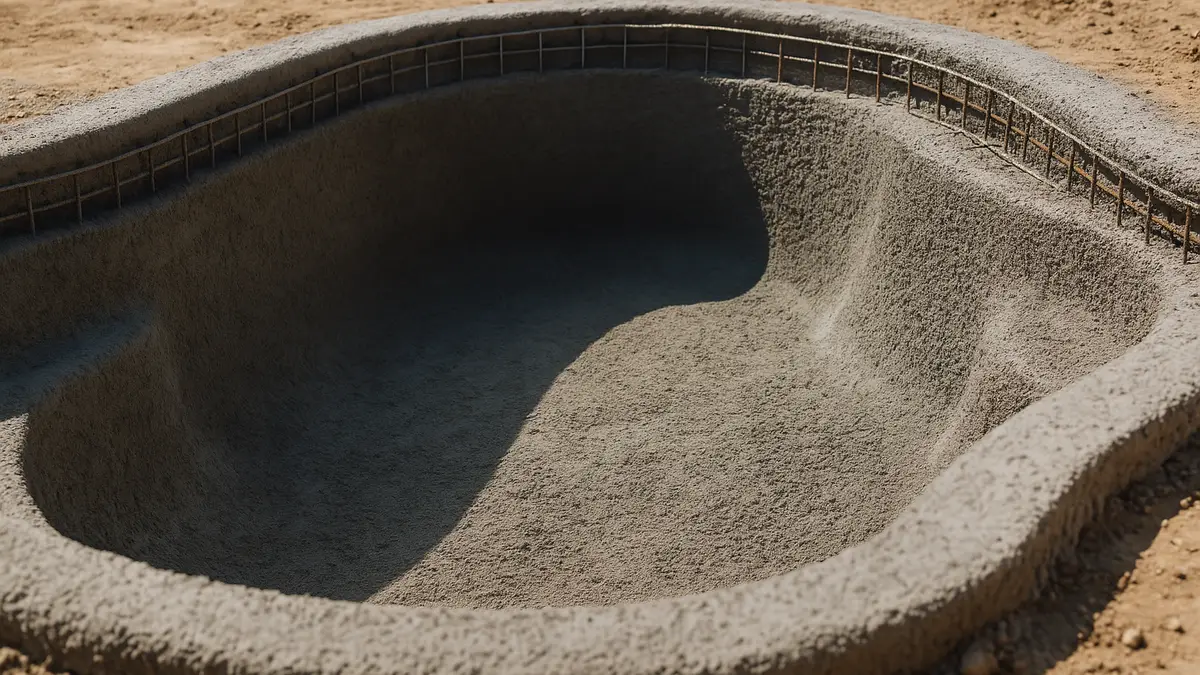
A gunite pool is concrete, and that single fact explains almost everything else about owning one: the near-unlimited shape flexibility, the higher cost, the long structural life, and the plaster finish that needs periodic replacement even though the shell underneath doesn’t.
What is a gunite pool?
Gunite is a mix of cement, sand, and water sprayed under pressure over a steel rebar frame, built directly in the excavated hole rather than manufactured off site. Once shaped and cured, the rough concrete shell gets a finish coat, commonly plaster, pebble aggregate, or tile, which is the surface you actually see and touch. “Concrete pool” is often used as a synonym, though some builders use poured concrete in forms instead of the spray technique; the end result and ownership experience are essentially the same either way.
What does a gunite pool cost?
Installed cost runs $65,000 to $120,000 or more, the highest of the three inground types, above vinyl liner ($35,000-$65,000) and fiberglass ($45,000-$85,000). The premium buys design flexibility: gunite can be shaped into essentially any footprint, depth profile, or built-in feature (tanning ledges, spillways, custom steps) since it’s formed on site rather than chosen from a manufacturer’s mold catalog. Our installation cost guide covers what typically drives a quote toward the high or low end of that range.
How long does a gunite pool actually last?
The concrete shell itself is the most durable part of any pool type, structurally sound for 20 to 30-plus years with minimal degradation. But the plaster, pebble, or tile finish on top of that shell is a separate lifespan entirely: standard plaster typically needs resurfacing every 10 to 15 years as it wears, stains, or roughens with age, while pebble and quartz finishes tend to hold up closer to the long end of that range or beyond. This is the single most important thing to understand before buying: the shell outlasts the finish by a wide margin, and budgeting only for the shell’s lifespan misses a real, recurring cost.
| Component | Typical lifespan |
|---|---|
| Concrete shell (structure) | 20-30+ years |
| Standard plaster finish | 10-15 years |
| Pebble/quartz finish | 15-20+ years |
| Tile (waterline or full) | 20+ years, rarely needs full replacement |
How does gunite construction compare to fiberglass?
Gunite takes longer, 8 to 16 weeks compared to fiberglass’s 3 to 6, because the shell is built and cured on site rather than dropped in pre-formed. That extra time buys shape flexibility fiberglass can’t match: fiberglass shells come from a fixed catalog of manufacturer molds, while gunite can be built into almost any shape a designer draws. Our fiberglass installation guide covers the trade-off from the other side, including why fiberglass wins on speed and lower resurfacing needs if a standard shape works for your yard.
How is a gunite pool actually built?
The process starts with excavation to the designed shape and depth, followed by setting a steel rebar frame that gives the concrete its structural strength, essentially a skeleton the gunite gets sprayed over. Crews then spray the gunite mix under high pressure, building up the walls and floor to the specified thickness in one continuous application. The shell needs to cure, typically a week or more, before plumbing, tile work, and coping go in around it. Only after the shell is fully cured and the surrounding decking is largely complete does the finish coat, plaster, pebble, or tile, get applied, followed by the initial fill and a chemical startup process that can take several days to fully balance. That sequencing, structure first, cure, then finish, is why gunite takes 8 to 16 weeks compared to fiberglass’s 3 to 6: each stage depends on the previous one being fully set before work continues.
What water chemistry care does a gunite pool need?
Plaster and other cementitious finishes are more sensitive to water chemistry imbalance than fiberglass gelcoat, since aggressive or poorly balanced water can etch the surface while scale-forming water can leave cloudy deposits. Keeping pH in the standard 7.4 to 7.6 range and total alkalinity in the standard 80 to 120 ppm range matters more for a gunite pool’s finish than it does for fiberglass, where the gelcoat surface is largely inert. Calcium hardness, typically kept in the 200 to 400 ppm range, is another chemistry parameter that matters specifically because of the plaster surface: water that’s too low in calcium hardness can pull calcium out of the plaster itself over time, a slow process called etching that shortens the finish’s usable life. None of this makes gunite ownership meaningfully harder day to day, it’s the same testing and dosing routine as any pool type, but it’s one more reason to stay on top of water chemistry rather than letting it drift.
Who should choose a gunite pool?
Gunite is the right call for anyone who wants a custom shape, built-in design features, or the longest possible structural lifespan and is prepared to budget for periodic resurfacing as a normal ownership cost, not a surprise. It’s a weaker fit for anyone optimizing purely for lowest total cost of ownership, where fiberglass usually wins, or anyone who wants the fastest possible install timeline. If shape and design freedom matter more to you than cost or speed, gunite is worth the premium; if not, it’s worth comparing against the other two inground types first.
For the full cost and lifespan comparison across all five pool types, see our pool types guide, and when your plaster finish starts showing its age, our resurfacing cost guide covers exactly what a replaster job runs by finish type.
Frequently asked questions
Quick answers to what readers ask us most
What is the difference between gunite and concrete pools?
Gunite is sprayed concrete, applied with a hose over a rebar frame and shaped as it's built. "Concrete pool" is often used loosely to mean the same thing, though some poured-concrete pools use forms instead of spraying. Both cure into the same structural shell and share the same maintenance needs.
How often does a gunite pool need replastering?
Roughly every 10 to 15 years, depending on water chemistry, climate, and the plaster type used. Standard white plaster tends toward the shorter end; pebble or quartz finishes often last closer to 15 years or more. See our resurfacing cost guide for what that job runs.
Are gunite pools worth the higher cost?
For owners who want a fully custom shape, built-in features, or the longest structural lifespan, yes. For owners focused purely on lowest total cost, fiberglass or vinyl typically wins. Gunite's real advantage is design flexibility, not being the cheapest way to get a durable pool.
Do gunite pools use more chemicals than other pool types?
Slightly. Plaster surfaces are more porous than fiberglass gelcoat and can be more prone to algae taking hold in rough or aging plaster, which sometimes means closer chemical monitoring. It's a real but manageable difference, not a major cost factor on its own.