
Inground vs Above-Ground Pool: Which Should You Buy
Inground pools cost $35,000 to $120,000-plus and last decades; above-ground pools cost $1,500 to $6,000 and last 15 to 25 years. Here's how to choose.
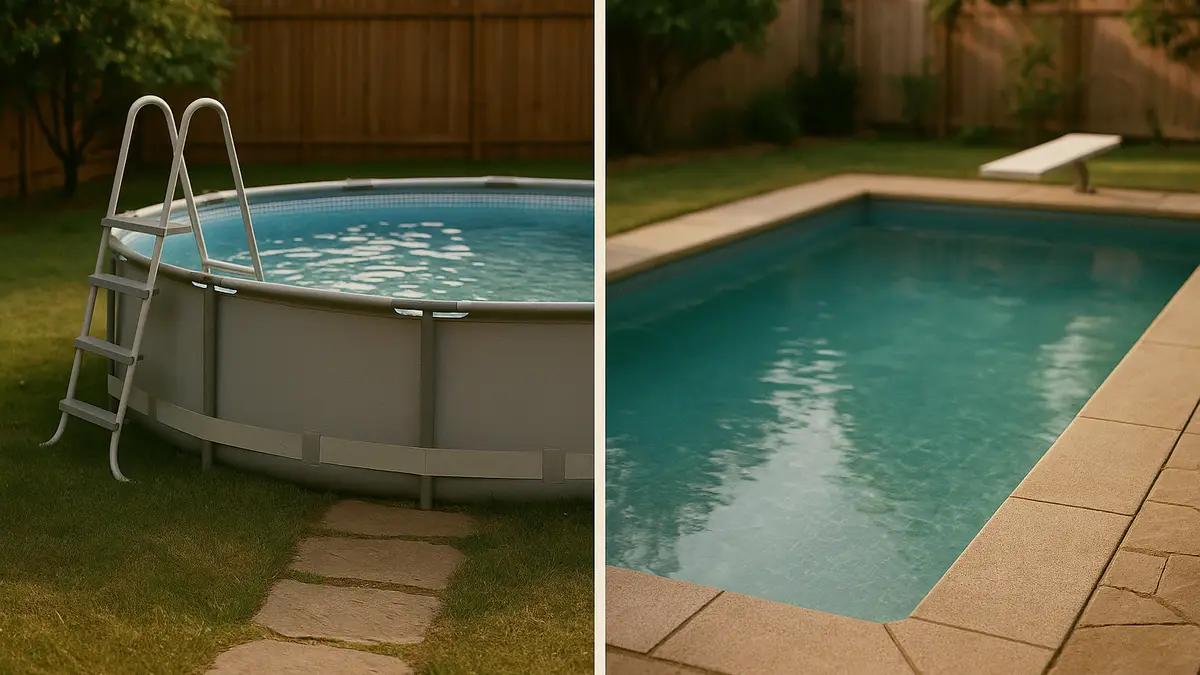
Above-ground or inground comes down to one real question: how long are you staying, and how much of that time is the pool cost spread across? Get that answer right and the rest of the decision mostly sorts itself out.
What’s the real cost difference?
Above-ground pools install for $1,500 to $6,000. Inground pools start at $35,000 for vinyl liner, run $45,000 to $85,000 for fiberglass, and reach $65,000 to $120,000 or more for gunite and concrete. That’s a 6x to 20x gap before you even factor in decking, fencing, or equipment upgrades, both of which apply to either type but scale with pool size either way.
| Factor | Above-ground | Inground |
|---|---|---|
| Installed cost | $1,500-$6,000 | $35,000-$120,000+ |
| Typical lifespan | 15-25 years | 20-30+ years |
| Annual upkeep | $600-$1,200 | $1,800-$5,000 |
| Adds home resale value | Rarely | Usually |
| Removable/relocatable | Yes | No |
How does annual upkeep compare?
Above-ground pools run $600 to $1,200 a year in chemicals, electricity, and routine service. Inground pools run $1,800 to $5,000 a year, mainly because they hold more water (a typical inground pool holds 18,000 to 20,000 gallons versus 5,300 to 13,500 gallons for a standard above-ground round), which means more chemical volume and more pump runtime to hit the standard turnover rate of cycling the full pool volume through the filter at least once every 8 hours. Our maintenance cost guide covers what drives that number up or down for either type.
How long does each type actually last?
Above-ground pools run 15 to 25 years before the frame, walls, or liner need full replacement, with the vinyl liner itself typically needing swapping every 7 to 15 years along the way. Inground pools last longer structurally, 20 to 30-plus years, but “longer” doesn’t mean “maintenance-free”: vinyl liner inground pools still need liner replacement on a similar cycle, and gunite pools need plaster resurfacing roughly every 10 to 15 years. Fiberglass inground shells hold up the longest with the least mid-life work, typically going 25 to 30-plus years before a gelcoat resurface is needed.
What does 10 years of ownership actually cost?
Run the math instead of comparing sticker prices alone. A mid-range above-ground pool at $4,000 installed, plus 10 years of upkeep at roughly $900 a year, lands around $13,000 total. A mid-range inground vinyl pool at $50,000 installed, plus 10 years of upkeep at roughly $3,000 a year, lands around $80,000, before factoring in a likely liner replacement partway through that decade. Stretch the same comparison to 20 years and the gap widens further for inground, since it now includes at least one resurfacing or major liner cycle, while above-ground pools typically need a full replacement around the 15 to 20 year mark rather than a resurfacing. The math doesn’t declare a winner on its own, an inground pool’s resale value and decades of use can easily justify the higher number, but seeing the real 10-year and 20-year figures side by side makes it a genuine budget decision rather than a guess based on installed cost alone.
Which one adds more to your home’s value?
Inground pools generally add more resale value, since buyers and appraisers tend to treat them as a permanent site improvement rather than equipment that could be removed. Above-ground pools rarely move the needle on appraisal and some buyers see them as a removal cost, not a feature. If resale value factors into your decision at all, that pushes toward inground, especially if you’re staying long enough to recoup part of the cost through years of use plus a modest value bump at sale.
What do you give up by choosing the cheaper option?
Above-ground buyers give up permanence and, in most markets, resale value, plus a ceiling on shape and size that inground pools don’t have. You also give up some depth: above-ground pools typically max out around 52 inches of wall height, while inground pools routinely reach 6 to 8 feet at the deep end, which matters if diving or deep-water play is part of what you want. Inground buyers give up money and time upfront, both the larger check and the multi-week to multi-month build, plus flexibility, an inground pool isn’t coming with you if you move, and removing one before a sale is expensive and rarely done. Neither trade-off is wrong, but naming it clearly before you buy avoids the common regret of discovering the limitation only after the pool is already in the ground or the yard.
Which one should you actually buy?
Buy above-ground if your budget caps out well under $35,000, you might move within 10 years, or you want a pool this season rather than after a multi-month build. Above-ground pools also make sense as a trial run: if you’re not sure pool ownership is for you, our pool pros and cons guide is worth reading before committing to either type. Buy inground if you’re staying 15-plus years, want the resale bump, or want a shape and finish that above-ground frames can’t offer. If your yard slopes, don’t force a flat-pad above-ground pool onto it; read our semi-inground pool guide first, since it often beats both options on a sloped lot.
Whichever type you land on, decking changes the finished look and the total price more than most buyers expect; our above-ground pool with deck guide covers what that adds, and our installation cost breakdown covers the site-prep and permit costs that apply on top of either pool type.
Frequently asked questions
Quick answers to what readers ask us most
Is an above-ground pool worth it compared to inground?
For most first-time buyers on a limited budget, yes. An above-ground pool delivers the core experience, swimming, cooling off, family time, for a fraction of inground cost, and it can be removed or replaced if your needs change. It's the better financial choice unless you're staying 15-plus years and want the resale value inground adds.
How much more does an inground pool cost than above-ground?
An inground pool costs roughly 6 to 20 times more than an above-ground pool installed, depending on the inground material. Vinyl liner inground starts around $35,000 versus $1,500 to $6,000 for above-ground, and gunite/concrete inground can run past $120,000.
Does an inground pool add more home value than above-ground?
Yes. Inground pools are generally treated as permanent improvements and add more resale value than above-ground pools, which many buyers view as a removable feature rather than a fixed part of the property. See our pool types guide for how each inground material compares.
Can you put an above-ground pool on a sloped yard?
Not easily; above-ground pools need a level pad, so a sloped yard usually means significant grading cost. A semi-inground pool is often the better fit for sloped lots, since it works with the grade instead of requiring it to be flattened.