
Solar Pool Heaters: Cost, Savings, and How They Work
How solar pool heaters work, what they cost ($3,000 to $6,000 installed), and how many degrees of temperature gain to realistically expect from roof panels.
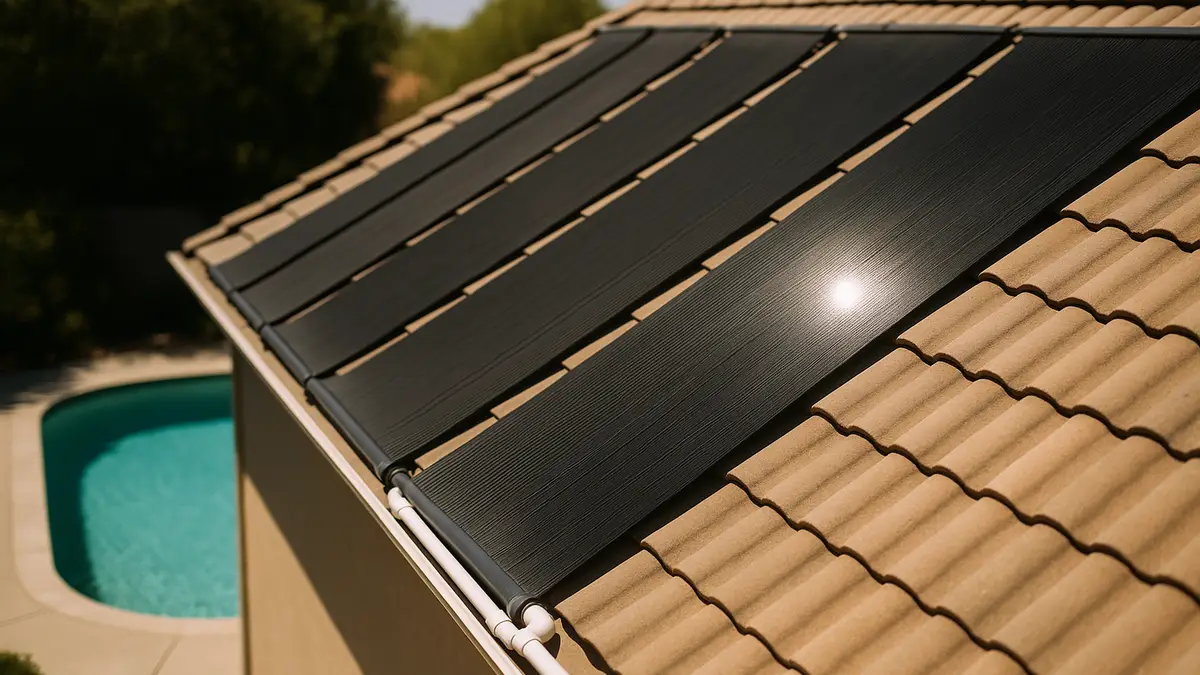
A solar pool heater is the lowest-operating-cost way to add a few degrees of warmth to a pool, and the entire system depends on one number most buyers skip past: how much panel area you actually install relative to your pool’s size.
How does a solar pool heater work?
Pool water is diverted from the normal filtration circuit through roof-mounted or rack-mounted solar panels, where it absorbs heat before flowing back into the pool. A diverter valve controls whether water routes through the panels or bypasses them, often automated based on panel temperature versus pool temperature so the system doesn’t pull heat out of the pool on a cool, sunny-but-cold day. No separate pump is usually needed since the existing filtration pump provides circulation; the panels themselves have no moving parts, which is part of why solar systems need so little ongoing maintenance.
What does a solar pool heater cost?
Installed cost runs $3,000 to $6,000, covering panels, mounting hardware, plumbing runs, and the diverter valve. That lands in a similar range to a gas heater ($2,000-$4,500) and below a typical heat pump ($3,500-$7,500), with the key difference showing up after installation: solar has essentially no ongoing fuel or major electricity cost, while gas and heat pump systems both carry real operating costs for as long as you run them. Our heater cost comparison lines up all three heater types side by side on both installed and running cost.
How much temperature gain should you expect?
As a rule of thumb, 5 to 10 degrees Fahrenheit above what the pool would reach with no heater at all, and that range depends heavily on panel coverage, sun exposure, and local climate. This is the number most solar heater marketing understates: it’s a temperature boost on top of ambient conditions, not a guarantee of a specific pool temperature regardless of weather. A solar system is best framed as a season-extension tool, adding a few weeks on each end of your swim season, rather than a full replacement for a gas heater if you need reliable, weather-independent heat.
| Factor | Effect on solar heating performance |
|---|---|
| Panel area vs. pool surface area | 50-100% coverage recommended; less underperforms |
| Sun exposure | Direct, unshaded exposure needed for meaningful gain |
| Local climate | Sunnier, milder climates get more consistent gain |
| Roof orientation | South-facing (in the northern hemisphere) performs best |
How much panel area do you actually need?
The standard installer rule of thumb is panel surface area equal to 50 to 100 percent of your pool’s surface area, with the higher end recommended for colder climates or if you want to extend the season further on both ends. A pool with a 500 square foot surface, for example, generally needs 250 to 500 square feet of panel to deliver the typical 5 to 10 degree gain; less than that delivers proportionally less benefit, not just a smaller version of the same result. Roof space and orientation often become the real limiting factor, since not every roof has enough south-facing, unshaded area to hit the recommended coverage.
What maintenance does a solar pool heater need?
Solar panels have no moving parts, which is the main reason they need so little upkeep compared to a gas heater or heat pump. Periodic visual inspection for cracked or leaking panel tubing, checking that the diverter valve is switching correctly between panel and bypass mode, and keeping the panel surface reasonably free of debris or heavy shading (a tree that’s grown in since installation, for example) cover most of what solar-specific maintenance involves. There’s no combustion, no refrigerant, and no motor to service the way there is with gas heaters and heat pumps, which is a real ownership advantage beyond the low operating cost. Panels are generally rated for well over a decade of service, and problems, when they do happen, are usually a cracked tube or fitting from age or a hard freeze rather than a systemic failure.
Does a solar pool cover work better with or instead of solar heating?
A solar pool cover and a solar pool heater solve a related but different problem, and pairing them is one of the most effective low-cost heating combinations available. A pool cover’s main job is reducing evaporation, which is the single largest source of heat loss from any outdoor pool, so a cover alone can meaningfully reduce how much heat a pool loses overnight regardless of how that heat was added in the first place. Running a solar heater during the day and covering the pool at night keeps more of the day’s gained heat in the water instead of losing it to evaporation before the next morning’s sun does its work again. Owners chasing the largest realistic temperature gain for the lowest total cost typically get there by combining both, rather than treating a heater and a cover as competing purchases.
Is a solar pool heater the right choice for you?
Solar makes the most sense for owners in sunny climates with adequate roof space who mainly want to extend the swim season a few weeks on each end and keep long-term operating costs low. It’s a weaker fit if you need reliable heat regardless of weather, want to swim comfortably on demand in cooler months, or don’t have the roof space or orientation to hit the recommended panel coverage; a gas heater or heat pump is the better fit there, and our heater troubleshooting guide covers keeping either type running well. Many owners run solar alongside a gas or heat pump system, using solar as the default and the other as backup for cloudy stretches, which is worth considering if your budget allows for it as part of your overall installation plan and pool type decision.
Frequently asked questions
Quick answers to what readers ask us most
How much does a solar pool heater cost?
Typically $3,000 to $6,000 installed, covering the panels, roof or rack mounting, plumbing to and from the pool, and a diverter valve that routes water through the panels. That's in the same general range as a gas heater and less than most heat pump installations.
How many degrees can a solar pool heater add?
As a rule of thumb, 5 to 10 degrees Fahrenheit above what the pool would reach unheated, depending on panel coverage relative to pool surface area, sun exposure, and local climate. Undersized panel coverage delivers noticeably less gain than the rule-of-thumb range.
How big do solar pool heater panels need to be?
A common installer rule of thumb is panel area equal to 50 to 100 percent of the pool's surface area, with the higher end recommended for colder climates or an earlier or later swim season. Undersized panel coverage is the most common reason a solar system underperforms expectations.
Does a solar pool heater work in cold or cloudy weather?
Poorly. Solar pool heaters depend directly on sun exposure, so cloudy stretches or cold snaps reduce or eliminate heat gain for as long as they last. They're best understood as a season-extending tool, not a substitute for a gas heater or heat pump if you need reliable heat on demand; see our heater cost comparison for on-demand alternatives.