
Fixing a Pool Heater: Diagnose and Repair Guide
Why a pool heater won't ignite, runs but doesn't heat, or trips off, and which fixes are safe DIY versus which ones need a licensed technician.
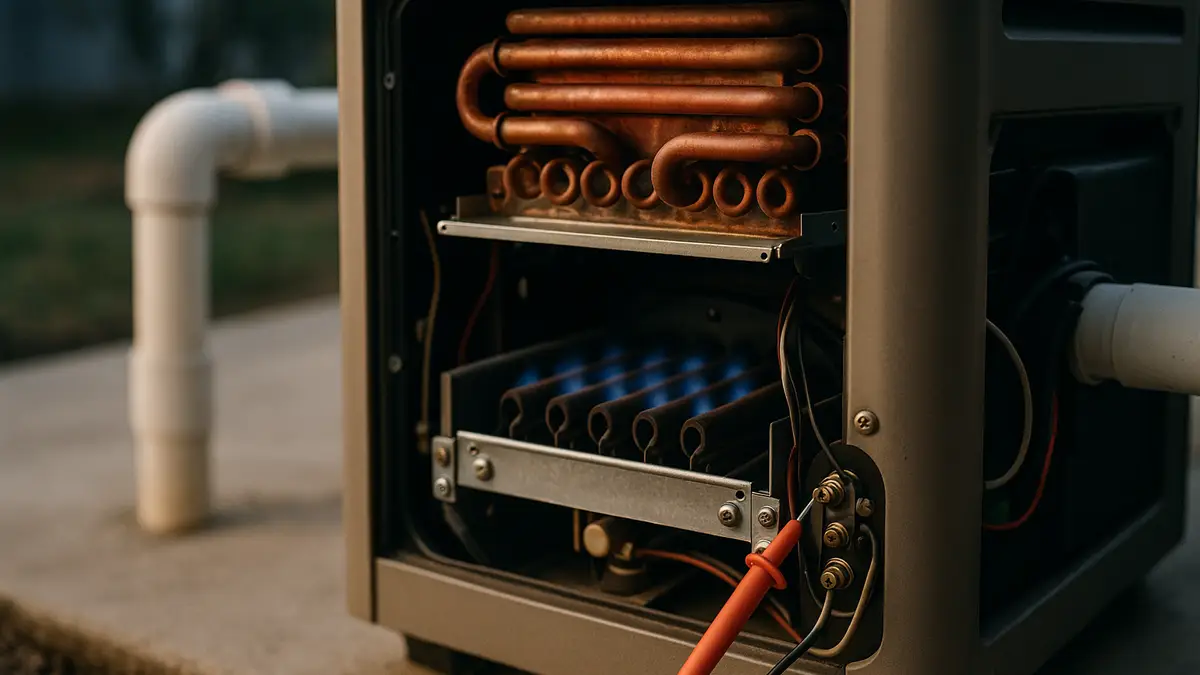
A pool heater that won’t fire almost always comes down to one of four things, and three of them are worth checking yourself before calling a technician for what might be a five-minute fix.
What are the most common pool heater problems?
No ignition, running without heating, short-cycling (turning on and off repeatedly), and error codes or a tripped reset switch cover the large majority of pool heater service calls. Gas heaters, heat pumps, and solar systems each have their own failure points, but flow restriction and thermostat misconfiguration are universal across all three, and both are things any owner can check before assuming a part has failed.
Why won’t the heater ignite?
Start with the basics: is the gas valve fully open, and is the heater’s power switch on? Beyond that, a dirty filter is the single most common root cause of ignition failure, because most pool heaters have a flow or pressure switch that blocks ignition entirely if it doesn’t detect adequate water circulation, a safety feature, not a malfunction. Clean or backwash the filter and check that the pump is running normally before assuming the igniter itself is bad. If flow is confirmed good and it still won’t ignite, the igniter, gas valve, or control board may need professional diagnosis.
Why does it run without heating the water?
Check the thermostat setting against the actual water temperature first; it sounds obvious, but a thermostat set at or below current pool temperature is one of the most common “broken heater” calls that isn’t actually broken. If the setting is genuinely higher than the water temperature and it’s still not heating, reduced water flow (again, often a dirty filter) or a failing heat exchanger are the next likely causes. A heat exchanger that’s scaled up with mineral deposits, common in hard water areas, transfers heat far less efficiently, which shows up as a heater that runs constantly without meaningfully raising the temperature.
| Symptom | Most likely cause | DIY or professional |
|---|---|---|
| Won’t ignite at all | Gas valve closed / dirty filter blocking flow switch | Check yourself first |
| Runs, no heat | Thermostat set low / low flow / scaled heat exchanger | Check thermostat yourself; exchanger needs a pro |
| Short-cycles on and off | Restricted flow / failing sensor | Check filter, then call a pro |
| Error code displayed | Varies by brand; often flow or ignition related | Check manual, then a pro if it persists |
When should you call a professional instead of DIY?
Anything involving the gas line, gas valve, electrical control board, or heat exchanger replacement should go to a licensed technician, both for safety and because these components require specific diagnostic tools and parts. Filter cleaning, checking the thermostat, and confirming the gas valve is open are safe for any owner to check first, and doing so before calling for service often saves an unnecessary trip charge. If your heater trips a reset switch repeatedly, that’s the system protecting itself; don’t repeatedly reset it without finding the underlying flow or ignition issue first.
Why does the heater short-cycle, turning on and off repeatedly?
Short-cycling almost always points back to the same flow and sensor issues covered above, just showing up as repeated on-off cycling instead of a flat failure to ignite. Restricted water flow, again most commonly a dirty filter, can cause the heater to reach its internal high-limit temperature threshold too quickly near the heat exchanger even though the bulk pool water is nowhere near that temperature, tripping a safety shutoff that then resets once things cool slightly, then repeats. A failing flow sensor or thermostat sensor can cause the same pattern by giving the control board inaccurate readings. Because short-cycling can indicate a genuine safety condition rather than just an inconvenience, it’s worth addressing promptly rather than living with it, both to protect the heat exchanger from repeated thermal stress and to avoid a bigger repair down the line.
How can you prevent most heater problems before they start?
Regular filter cleaning is the single highest-value preventive step, since restricted flow is the root cause behind ignition failure, short-cycling, and reduced heating output alike. Checking the pump and filter on a routine schedule, not just when something seems wrong, catches the buildup before it’s severe enough to trip a safety switch. In hard water areas, periodic heat exchanger inspection or professional descaling prevents the gradual efficiency loss that scaling causes, extending the unit’s useful life well beyond what reactive-only maintenance achieves. Closing the heater properly for the off-season, following manufacturer guidance on draining or winterizing, also prevents a large share of the “won’t start in spring” service calls that come from skipped off-season prep rather than a genuine failure.
How is heater output actually calculated?
Pool heaters are sized in BTUs per hour, and the physics is simple: it takes 8.34 BTU to raise 1 gallon of water by 1 degree Fahrenheit, the same water-weight constant used in pool chemical dosing. Typical residential gas pool heaters run 200,000 to 400,000 BTU per hour, sized to the pool’s volume and your climate’s temperature rise needs. If your heater seems undersized for your pool (it runs constantly but never reaches the set temperature even with flow and thermostat both confirmed good), that’s a sizing problem, not a repair problem, and it’s worth reviewing against our heater installation cost guide for what proper sizing costs to correct. If repair costs are starting to stack up on an aging unit, solar pool heating is worth comparing as a lower-maintenance long-term alternative, and our pool types guide and installation cost guide round out the bigger picture if you’re weighing a broader equipment upgrade.
Frequently asked questions
Quick answers to what readers ask us most
Why won't my pool heater ignite?
The most common causes are an interrupted gas supply, a dirty or faulty igniter, or a safety switch (pressure or flow) preventing ignition because the system isn't detecting adequate water flow. Check that the gas valve is fully open and the filter isn't restricting flow before assuming the igniter itself has failed.
Why does my pool heater run but not heat the water?
Check the thermostat setting first, it's often simply set below the current water temperature. If the setting is correct and the unit still runs without heating, low water flow from a dirty filter, or a failing heat exchanger, are the next most likely causes.
Can I fix a pool heater myself?
Some issues, a dirty filter restricting flow, a low thermostat setting, a tripped reset button, are safe DIY fixes. Gas valve, control board, and heat exchanger repairs involve gas lines or electrical components and should go to a licensed pool heater technician.
How much does pool heater repair typically cost?
Simple fixes (igniter, sensor, switch replacement) often run a few hundred dollars in parts and labor. Heat exchanger replacement is a major repair that can approach the cost of a portion of a new unit; see our heater installation cost guide for when replacement makes more sense than repair.