
Pool Heater Installation Cost by Heater Type
Gas pool heaters install for $2,000 to $4,500, heat pumps $3,500 to $7,500, and solar $3,000 to $6,000. Here's what drives the cost and which type fits your climate.
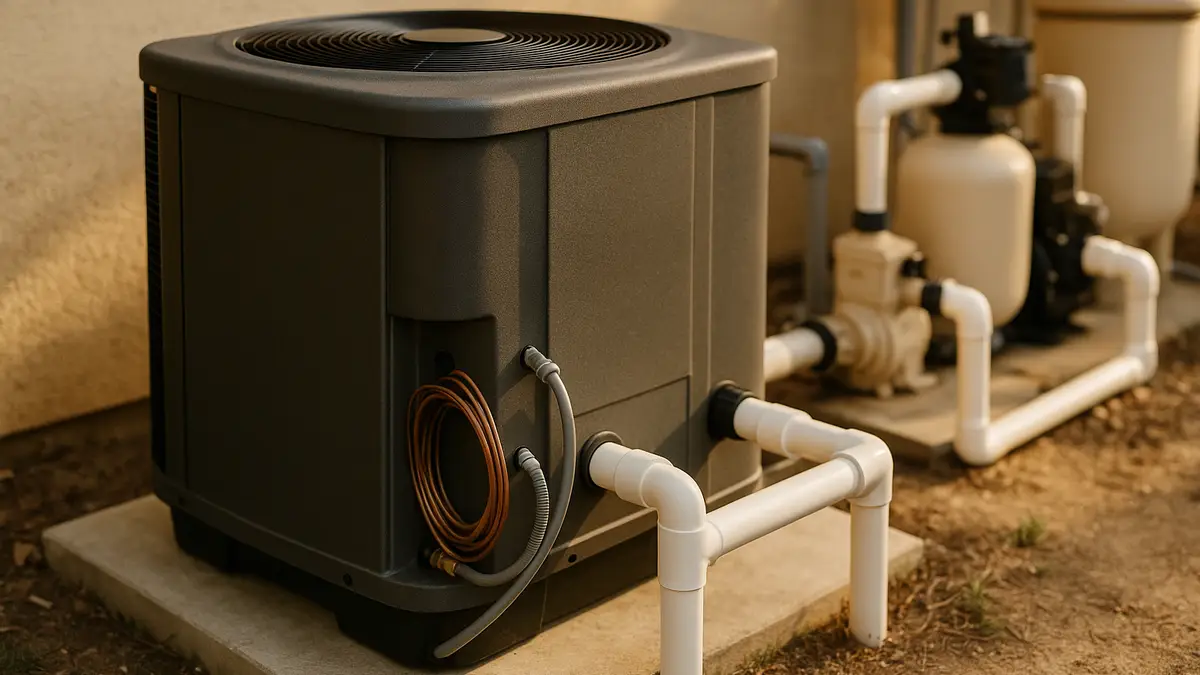
Pool heater installation cost depends almost entirely on which type you choose, and the type that costs least to install isn’t always the type that costs least to run. Here’s the real trade-off between gas, heat pump, and solar.
What does each heater type cost to install?
| Heater type | Installed cost | Heats regardless of air temp? | Typical operating cost |
|---|---|---|---|
| Gas | $2,000-$4,500 | Yes | Highest per hour of use |
| Heat pump | $3,500-$7,500 | No, needs warm air | Lowest in mild climates |
| Solar | $3,000-$6,000 | No, needs sun exposure | Lowest overall once installed |
Gas heaters cost the least to install but the most to run, since they burn fuel directly to generate heat. Heat pumps cost more upfront but pull ambient heat from the air rather than generating it, which is far cheaper per degree of temperature rise, as long as the air is warm enough to pull heat from. Solar systems have the lowest ongoing cost of any type since there’s no fuel or major electricity draw beyond a small circulation pump, but performance depends entirely on sun exposure and available roof space; our solar pool heater guide covers that trade-off in full.
How is a pool heater sized?
Every heater type is sized using the same underlying physics: it takes 8.34 BTU to raise 1 gallon of water 1 degree Fahrenheit. Typical residential gas heaters run 200,000 to 400,000 BTU per hour, sized against your pool’s volume and how fast you want the water to heat up. A pool holding 18,000 to 20,000 gallons (a typical residential inground reference size) needs meaningfully more heater output than a 5,300 to 13,500-gallon above-ground pool to reach the same temperature in the same amount of time. Undersizing is the most common installation mistake, since a heater that’s too small for the pool volume runs constantly without ever catching up, especially overnight or on cooler days.
Which heater type fits which climate?
Gas heaters are the most climate-independent option, since they generate heat directly rather than depending on ambient conditions, which makes them the standard choice for anyone wanting reliable heat on demand regardless of season. Heat pumps make the most financial sense in mild, warm climates where air temperature rarely drops low enough to hurt their efficiency; in colder regions, or for early-season and late-season swimming, a heat pump can struggle to keep up. Solar performs best in sunny climates with a roof (or nearby structure) oriented to catch consistent sun exposure, and works best as a temperature-extending tool rather than a guarantee of heat on any given day.
What affects installed cost within each range?
Distance from the equipment pad to the heater’s final location affects gas line or electrical run length, and longer runs cost more in materials and labor. Existing gas or electrical service capacity matters too, upgrading a panel or gas meter to support a larger heater adds cost beyond the heater itself. For heat pumps, unit size (matched to the BTU sizing above) is the main cost driver within the range; larger heat pumps for larger pools cost more both to buy and install.
Can you install more than one heater type together?
Yes, and pairing a solar system with a gas heater or heat pump is common enough to be a standard configuration many installers offer. Solar handles the bulk of routine heating on sunny days at essentially no operating cost, while the gas or heat pump backup covers cloudy stretches, cooler shoulder-season swims, or whenever you want guaranteed heat regardless of weather. The combined installed cost is naturally higher than either system alone, but many owners find the split pays for itself by keeping the backup heater’s runtime, and therefore its operating cost, much lower than it would be as a standalone system. If you’re building new, it’s worth pricing this combined approach from the start rather than adding a second system later, since running plumbing for both at once during the original install is cheaper than retrofitting.
How long does a pool heater installation take?
Gas and heat pump installations typically take 1 to 2 days for a straightforward site with existing gas or electrical service nearby, longer if a gas line extension or electrical panel upgrade is needed. Solar installations usually take 1 to 3 days, depending mainly on roof access and how much panel area the recommended coverage requires. None of these timelines are long compared to the pool build itself, which is why heater installation is often scheduled toward the end of a new pool project or as a standalone add-on to an existing pool without requiring the pool to be drained or taken out of service for more than a day or two.
How do you decide which heater to install?
Start with your climate and how you plan to use the pool: gas for fast, on-demand heat regardless of weather, heat pump for lower operating cost in a mild climate with consistent use, solar for the lowest long-term running cost if your site has good sun exposure. If your current heater is failing rather than absent, our heater troubleshooting guide covers which problems are worth repairing versus which point toward replacement. And whatever heater you choose, it’s one piece of the total installation cost that varies by pool type as much as by equipment choice.
Frequently asked questions
Quick answers to what readers ask us most
What is the cheapest pool heater to install?
Gas heaters have the lowest typical installed cost, $2,000 to $4,500, though they cost more to operate per hour than a heat pump. Solar systems run $3,000 to $6,000 installed but have the lowest ongoing operating cost of the three once installed.
Is a heat pump or gas heater better for a pool?
It depends on climate and how fast you need heat. Gas heaters heat water quickly regardless of air temperature, useful for occasional or short-notice use. Heat pumps cost less to run but pull heat from the air, so they lose efficiency once air temperature drops, making them a better fit for mild, consistently warm climates.
Do I need a bigger heater for a bigger pool?
Yes. Heater sizing follows the same 8.34 BTU per gallon per degree Fahrenheit math used in chemical dosing, so a larger pool volume needs more BTU output to heat in a reasonable time. Typical residential gas heaters run 200,000 to 400,000 BTU per hour, sized to pool volume and desired heat-up speed.
Can I install a pool heater myself?
Gas and heat pump installation involve gas line or high-voltage electrical connections and should be done by a licensed professional, both for safety and to keep any warranty valid. Solar systems have more DIY-friendly components, though roof mounting and plumbing runs still often benefit from professional installation.