
Semi-Inground Pool Cost: What You'll Actually Pay
Semi-inground pool cost runs $8,000 to $20,000 installed. Here's exactly what drives that price, from retaining wall material to slope severity and size.
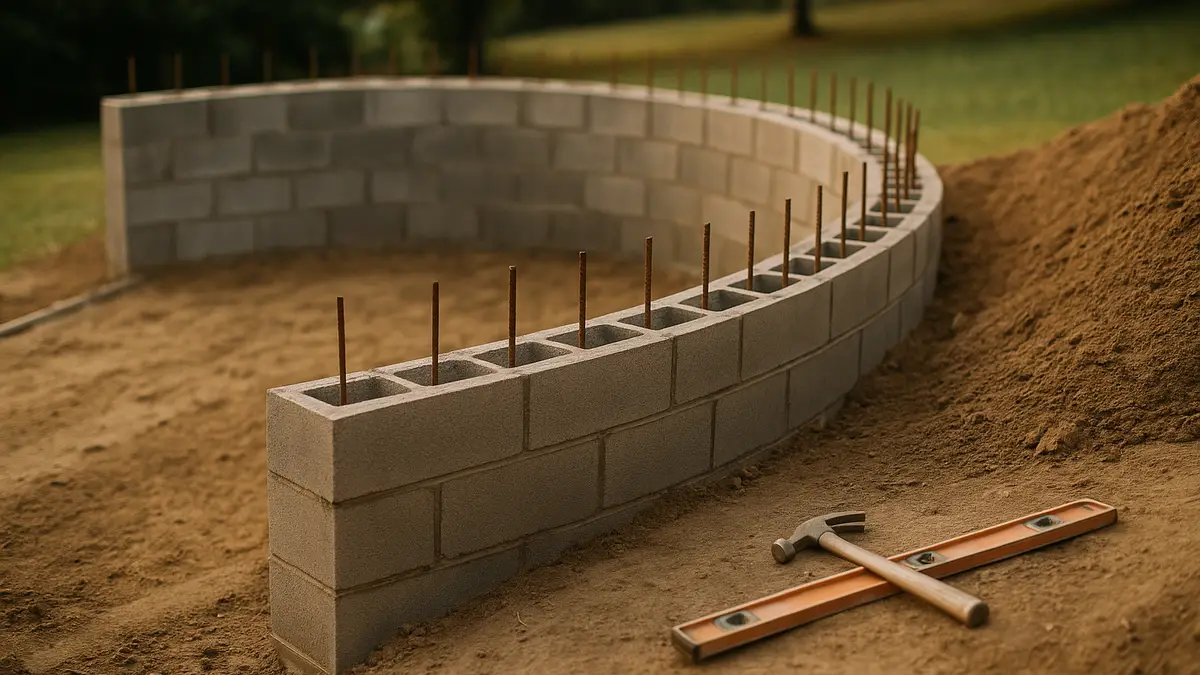
The $8,000 to $20,000 semi-inground pool cost range is wide because two things drive it more than anything else: how steep your slope is, and what material holds back the exposed side. Here’s how those two factors actually move the number.
What does a semi-inground pool cost?
Installed cost runs $8,000 to $20,000, well above a standard above-ground pool ($1,500-$6,000) but far below any fully inground option (starting at $35,000). That’s the core value proposition covered in our semi-inground pool guide: most of an above-ground pool’s low cost, with a more built-in, permanent look.
| Site condition | Retaining wall type | Typical cost |
|---|---|---|
| Gentle slope, short exposed wall | Timber | $8,000-$12,000 |
| Moderate slope | Timber or engineered block | $12,000-$16,000 |
| Steep slope, tall exposed wall | Engineered block or concrete | $16,000-$20,000 |
What drives cost to the low end of the range?
A gentle slope that only needs a short section of exposed wall keeps costs near $8,000 to $12,000, since less retaining structure means less material and labor. Timber retaining walls are the cheapest common option and work fine for moderate loads and heights, though they carry a shorter expected lifespan than block or concrete. Smaller pool sizes also keep total cost down, the same way they do for any wall-and-liner pool type.
What pushes cost toward the high end?
Steeper slopes need taller retaining walls, and wall height doesn’t scale linearly with cost, a taller wall needs to resist significantly more soil and water pressure, which often means moving from timber to engineered block or poured concrete. Larger pool footprints scale cost the same way any above-ground-style build does. Difficult soil (heavy clay, poor drainage) can require additional engineering or drainage work behind the retaining wall, adding cost that isn’t obvious from the pool price alone.
Does the retaining wall need to be engineered?
For anything beyond a shallow, gentle slope, yes, and this isn’t optional if you want the pool to last. A retaining wall holding back both soil and, indirectly, the water pressure from the pool itself needs to be sized for that load, not just built to look sturdy. Undersized or poorly built retaining walls are the most common failure point for semi-inground pools, and failure here isn’t cosmetic, it can mean the pool wall itself shifting or failing. Get a structural opinion, not just a contractor’s price quote, for any semi-inground project on a meaningful slope.
What do decking and fencing add on top of the pool cost?
The $8,000 to $20,000 range covers the pool and retaining wall, not decking or fencing, both of which are common additions on a semi-inground build since the exposed wall often benefits visually from a deck that hides it. A partial deck along the exposed side typically adds $3,500 to $8,000, similar to what it would cost on a standard above-ground pool. Fencing is frequently required by code regardless of pool type, and a semi-inground pool’s exposed wall height can sometimes count toward the barrier requirement if it meets local height and gap standards, worth confirming with your local building department before assuming you can skip separate fencing. Add these together with the base pool cost and a fully finished semi-inground project commonly lands $15,000 to $30,000 all-in, still well under any fully inground option.
What drainage work does a sloped site need?
Water management behind the retaining wall is one of the most overlooked cost items in a semi-inground build. Without proper drainage, water collects behind the wall during rain and adds pressure the wall wasn’t necessarily engineered to hold indefinitely, which is a leading cause of retaining wall failure over time. A drainage system, typically gravel backfill with a perforated pipe directing water away from the wall, adds a modest cost to the project but is not optional on any meaningful slope. If a contractor’s quote doesn’t explicitly mention drainage behind the retaining wall, ask about it directly before signing, since it’s easy for this line item to get left out of a quote that otherwise looks complete.
How does this compare to going fully inground on the same slope?
A fully inground pool on a sloped lot needs to either excavate the entire footprint to a level plane (expensive extra excavation) or add its own engineered retaining or shoring structure, both of which typically cost far more than a semi-inground build’s $8,000 to $20,000 range. The gap can easily run $20,000 to $80,000 or more depending on slope severity and inground material chosen; our inground vs above-ground comparison and full installation cost guide cover what a fully inground build costs for reference. For most sloped lots, semi-inground is the more cost-effective way to get a permanent-feeling pool without inground pricing; our pool types guide lines up every option side by side if you’re still comparing.
How should you get an accurate quote for your specific lot?
Get a site visit before requesting a firm number, since slope severity and soil type both need to be assessed in person, not estimated from a description or photos. Ask each contractor to break the quote into pool cost, retaining wall cost, and drainage cost as separate line items rather than one bundled figure, since that makes it much easier to compare quotes apples to apples and to spot a quote that’s quietly skipped drainage work to look cheaper. Get at least two quotes for any semi-inground project on a real slope, since the range of legitimate prices for the same site can be wider than buyers expect, driven by how each contractor engineers the retaining wall rather than by markup alone.
Frequently asked questions
Quick answers to what readers ask us most
Why is there such a wide range in semi-inground pool cost?
Because slope severity and retaining wall material both swing the price significantly within the $8,000 to $20,000 range. A gentle slope with a timber wall costs far less than a steep cut needing an engineered concrete or block retaining wall.
Is a timber or concrete retaining wall better for a semi-inground pool?
Timber is cheaper and common for moderate slopes, but has a shorter lifespan, often 15 to 25 years, matching the pool wall itself. Engineered concrete or block retaining walls cost more upfront but hold up longer and handle steeper cuts or heavier soil loads more reliably.
Does a semi-inground pool need a permit?
Yes, in nearly all jurisdictions, since it involves both excavation and a retaining structure, both of which typically require permit review. Confirm with your local building department before signing a contract, since retaining wall engineering requirements vary by soil type and cut depth.
Is a semi-inground pool cheaper than a fully inground pool on a slope?
Almost always, often by $20,000 to $80,000 or more, since a fully inground pool on a sloped lot requires far more excavation, engineering, and retaining structure than a semi-inground build that works with the slope instead of flattening it.