
Best Variable-Speed Pool Pumps for Energy Savings
The best variable-speed pool pumps ranked by real energy savings and price, plus the turnover math that shows what you'll actually save on electricity.
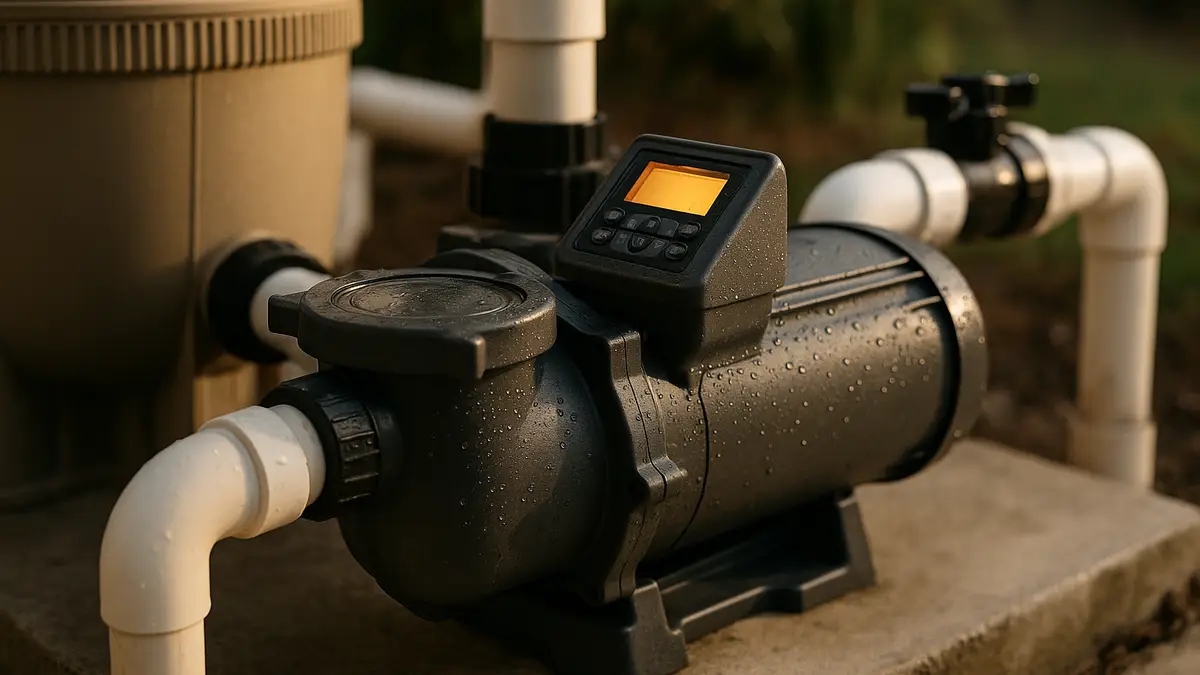
Every pool pump on this list does the same job: pull water through the filter and back into the pool. The difference is how much electricity that job costs you over a year, and a variable-speed motor is the single biggest lever most owners have to cut it.
What makes a pump “variable-speed,” and why it matters
A variable-speed pool pump is a permanent-magnet motor that can run anywhere from about 600 to 3,450 RPM instead of only full-speed. Running slower for longer to hit your daily turnover uses far less power than running a single-speed pump at full blast for a short window, because pump energy use scales with roughly the cube of RPM. Cut speed in half and power draw drops to about an eighth. That’s the whole savings story in one sentence.
The picks at a glance
| Pick | Model class | Price band | Best for | Who it’s NOT for |
|---|---|---|---|---|
| Best overall | Hayward TriStar VS | $700-$1,100 | Inground pools, daily use | Renters, temporary pools |
| Best premium | Pentair IntelliFlo VSF | $1,000-$1,400 | Large pools, solar/heater pairing | Tight budgets |
| Best budget variable-speed | Century/Regal Beloit replacement motors | $500-$800 | DIY motor swaps on existing pumps | Owners without plumbing experience |
| Best for above-ground | Intex or Hayward small-frame VS | $350-$600 | Above-ground pools under 15,000 gal | Large inground pools needing high flow |
Best overall: Hayward TriStar VS
The TriStar VS pairs a straightforward digital control panel with eight programmable speeds, so you can set a slow overnight circulation speed and a faster daytime speed for the cleaner or heater without touching it again. Installed cost usually lands $700-$1,100 depending on plumbing changes, and Hayward’s parts network makes service easy almost anywhere in the country. It pushes enough flow for pools up to the 20,000-25,000 gallon range at mid speed.
Not for: pools under contract with a specific pump brand for warranty reasons, or anyone who wants app control out of the box (it doesn’t include Wi-Fi standard).
Best premium: Pentair IntelliFlo VSF
The VSF variant blends variable-speed and variable-flow control, meaning it holds a target GPM rather than just an RPM, useful if you run a solar heater or an automatic cleaner that both want steady flow. It’s the quietest pump in this list at low speed, close to background noise, and pairs cleanly with Pentair’s automation systems if you already have one. Expect $1,000-$1,400 installed.
Not for: budget-conscious buyers on a small or seasonal pool where the efficiency gains won’t offset the higher sticker price within a few years.
Best budget: replacement variable-speed motors
If your existing pump housing and plumbing are in good shape, a Century or Regal Beloit variable-speed motor swap ($500-$800 including basic install) captures most of the electricity savings without replacing the whole pump assembly. This is the value play for owners with a working single-speed pump that’s simply expensive to run.
Not for: anyone whose pump housing, seals, or basket are already worn, since you’d be pairing a new motor with a failing pump.
Best for above-ground pools: small-frame variable-speed units
Above-ground pools rarely need the flow rate inground pools do. A small-frame variable-speed pump in the $350-$600 range covers most 15,000-gallon-and-under above-ground and semi-inground setups, and the shorter daily run times common on above-ground pools mean even modest speed reduction adds up.
Not for: larger above-ground pools (24-foot round and up) that need closer to inground-level flow; step up to a 1.5 HP variable-speed unit instead.
Sizing by turnover rate, not horsepower
Horsepower tells you the ceiling, not what you should actually run at. The pool industry standard is a full turnover, the entire pool volume moving through the filter, at least once every 8 hours. Work backward from gallons:
- Typical inground pool (18,000-20,000 gal): needs about 37-42 GPM to hit an 8-hour turnover, which almost any variable-speed pump clears at 50-60% speed.
- 24-foot round above-ground pool (about 13,500 gal): needs roughly 28 GPM, comfortably inside a small-frame pump’s low-to-mid range.
Run the pump slow for that daily turnover window, and bump to a higher speed only when you’re vacuuming, running a solar heater, or dealing with algae, which needs faster circulation. That’s the entire strategy for capturing the savings this category promises.
What a variable-speed pump does to your maintenance cost
Pump electricity is one of the bigger line items inside a pool’s annual maintenance cost, especially on inground pools running $1,800-$5,000 a year in chemicals, electricity, and routine service. A variable-speed swap typically shaves $300-$700 a year off that number for pools that run the pump 8+ hours a day in summer, which is most of them.
What to check before you buy
Confirm the pump’s plumbing size matches your existing pipe (1.5-inch or 2-inch is standard), and check whether your filter type changes the flow rate you need; the sand vs cartridge vs DE comparison covers how each filter’s resistance affects pump performance. If your current pump is already struggling, run through the common pump problems guide first, since a failing impeller or worn seal can look like an undersized pump when it isn’t. Once the new pump is running, keep the filter itself on a regular cleaning schedule using the filter cleaning guide so you’re not fighting clogged media with a pump that’s finally doing its job efficiently.
Frequently asked questions
Quick answers to what readers ask us most
How much does a variable-speed pool pump save on electricity?
Most homes see a 50-80% cut in pump electricity use compared to a single-speed pump, since the variable-speed motor can run at low RPM for daily circulation instead of full power around the clock. On a typical inground pool that's often $300-$700 a year in savings.
What size variable-speed pump do I need?
Match the pump's flow rate (GPM) to your pool's turnover requirement: gallons divided by 8 hours, divided by 60. An 18,000-gallon pool needs roughly 37 GPM at minimum, which almost any 1.5-2 HP variable-speed pump clears easily at mid speed.
Are variable-speed pumps worth it for above-ground pools?
Usually not as clear-cut. Above-ground pools run smaller volumes and shorter daily hours, so the payback period stretches longer, often 3-4 years. They're still worth it if you run the pump 8+ hours a day in summer; otherwise a mid-tier single-speed pump is fine.
Do variable-speed pumps need a special filter?
No, they work with sand, cartridge, or DE filters. See the filter comparison for how filter type affects the flow rate your pump needs to push.