
Fiberglass Pool Installation: Process, Cost, Timeline
How a fiberglass pool goes in, from excavation to first fill, plus the real cost ($45,000 to $85,000) and a realistic 3 to 6 week install timeline.
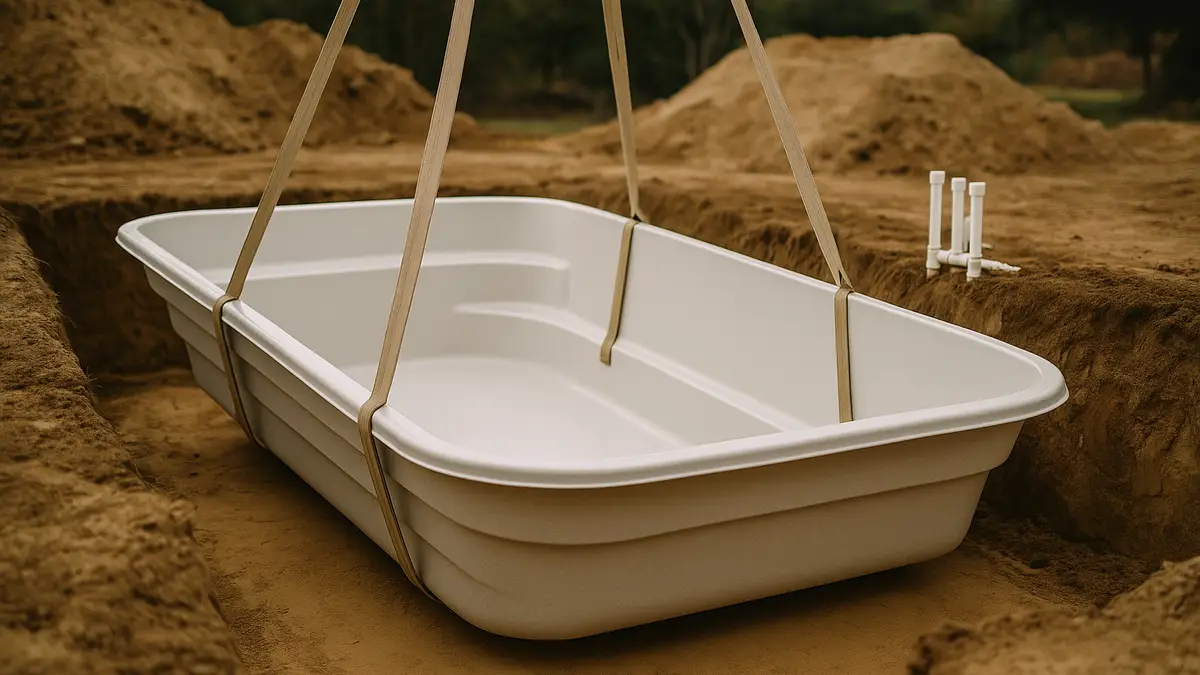
Fiberglass pool installation is the fastest way to get an inground pool in the ground, because most of the manufacturing happens before the crane ever shows up. Here’s what the process actually looks like, step by step, and what it costs.
What is fiberglass pool installation?
A fiberglass pool is a single molded shell, built at a factory, then trucked to your site and lowered into an excavated hole with a crane. That’s the core difference from vinyl liner and gunite pools, which are built in place. The shell arrives with its shape, depth, and steps already formed, so the on-site work is mostly excavation, precise placement, backfill, and plumbing rather than construction.
What does fiberglass installation cost?
Installed cost runs $45,000 to $85,000, landing between vinyl liner ($35,000-$65,000) and gunite/concrete ($65,000-$120,000+). The shell itself is a large share of that cost, but excavation, crane rental, backfill material, plumbing, electrical, and decking all add up separately. Our installation cost guide breaks down how those line items typically split across any inground pool type.
What’s the step-by-step installation process?
| Step | What happens | Typical duration |
|---|---|---|
| Site prep and excavation | Hole dug to shell dimensions plus working room | 2-4 days |
| Shell placement | Crane lowers and sets the shell, leveled precisely | 1 day |
| Backfill and plumbing | Gravel or sand backfill placed as pool fills with water simultaneously | 3-5 days |
| Decking and coping | Concrete, pavers, or composite decking installed around the shell | 1-3 weeks |
| Startup and balancing | Equipment connected, water tested and chemically balanced | 2-3 days |
The full sequence typically runs 3 to 6 weeks, though decking choice is usually the biggest swing factor. A simple concrete deck moves faster than pavers or a custom stone surround.
Why is the backfill step so critical?
Backfill and filling happen at the same time on purpose: water going into the shell and backfill material going around the outside need to rise together, roughly in step, so the shell doesn’t get pushed out of shape by unequal pressure from one side. This is one of the most common places a rushed or inexperienced crew causes problems, since skipping the simultaneous fill-and-backfill sequence can distort the shell or crack the surrounding soil bed. It’s worth asking any contractor directly how they sequence this step before signing a contract.
What site conditions make installation harder?
Crane access is the first thing to check before you commit to fiberglass, since the shell arrives as one large piece and needs a crane path from the street to the hole with no obstructions like low power lines, mature trees, or a narrow side-yard gate. Tight urban and suburban lots sometimes need a smaller specialty crane or, in rare cases, aren’t workable for fiberglass at all, which is worth confirming with your installer before you fall in love with a specific shell design. High water tables and expansive clay soils are the second major site factor, since groundwater pressure on an empty or partially filled shell can cause it to shift or even float if it’s not properly engineered against. Installers handle this with a hydrostatic relief valve built into the shell floor, an engineered gravel base, or both, and any installer working in a high-water-table area should bring this up unprompted, not wait for you to ask.
What should you inspect before the shell goes into the ground?
Fiberglass shells travel by truck, sometimes long distances from the manufacturer, and transport stress can occasionally cause hairline cracks or gelcoat damage that’s easier to see and fix before the shell is buried than after. Walk the shell with your installer before it’s set in the hole and look specifically at the corners, steps, and any tight curves, the areas most likely to show stress from transport or handling. It’s a five-minute check that avoids a much bigger problem if damage is discovered only after backfill and plumbing are already in place around it.
How does fiberglass compare to gunite for a custom project?
Fiberglass shells come in a fixed catalog of shapes and sizes from the manufacturer, so if you want a fully custom shape, an unusual depth profile, or a built-in feature like a tanning ledge in a specific spot, gunite is the more flexible choice, since it’s formed on site rather than pre-molded. Our gunite and concrete pool guide covers that trade-off in more depth, including why gunite costs more and takes longer for that flexibility. Fiberglass wins when a standard shape fits your yard and you want the fastest path from contract to swimming, plus lower long-term resurfacing costs since the gelcoat lasts far longer than gunite plaster.
Before committing to fiberglass, confirm it’s the right inground type for your goals; our pool types comparison lines it up against vinyl and gunite on cost and lifespan, and our resurfacing cost guide is worth a look if long-term upkeep cost is part of your decision.
What questions should you ask a fiberglass installer before signing?
Ask how many fiberglass installations they complete in a typical year, since fiberglass placement and the simultaneous fill-and-backfill sequence reward specific experience more than general pool construction knowledge does. Ask which manufacturer’s shells they install and whether you can see a completed local project, since shell quality and manufacturer warranty terms vary. Ask directly how they handle high water table or clay soil conditions if either applies to your site, and get their answer in writing as part of the contract rather than as a verbal assurance. Finally, confirm what the warranty actually covers, structural shell defects, gelcoat blistering, and workmanship are typically separate warranty categories with different terms, and a reputable installer should be able to explain each without hesitation.
Frequently asked questions
Quick answers to what readers ask us most
How long does fiberglass pool installation take?
Most fiberglass installs take 3 to 6 weeks from breaking ground to first fill, the fastest of any inground pool type. The shell itself is set in a single day; the rest of the timeline is excavation prep, backfill, plumbing, and decking.
Why is fiberglass pool installation faster than gunite?
Because the shell is manufactured off-site and arrives pre-molded, cured, and ready to drop into the hole. Gunite pools are built in place, sprayed, and cured on site over weeks, which is the main reason gunite installs run 8 to 16 weeks compared to fiberglass's 3 to 6.
Can a fiberglass pool be installed on any soil type?
Most soil types work, but high water tables and expansive clay soils need extra engineering, like a hydrostatic relief valve or an engineered base, to keep the empty or partially filled shell from shifting. A qualified installer should assess your soil before quoting a fixed price.
Does a fiberglass pool need resurfacing like gunite?
Less often. Fiberglass shells hold their gelcoat finish for roughly 25 to 30-plus years before a resurface is worth considering, compared to gunite's 10 to 15 year plaster cycle. See our resurfacing cost guide for what a fiberglass gelcoat refresh runs versus a full gunite replaster.