
Above-Ground Pool with a Deck: Designs and Costs
Deck options for an above-ground pool, from a single entry platform to a full wraparound deck, plus what each design typically adds to your budget.
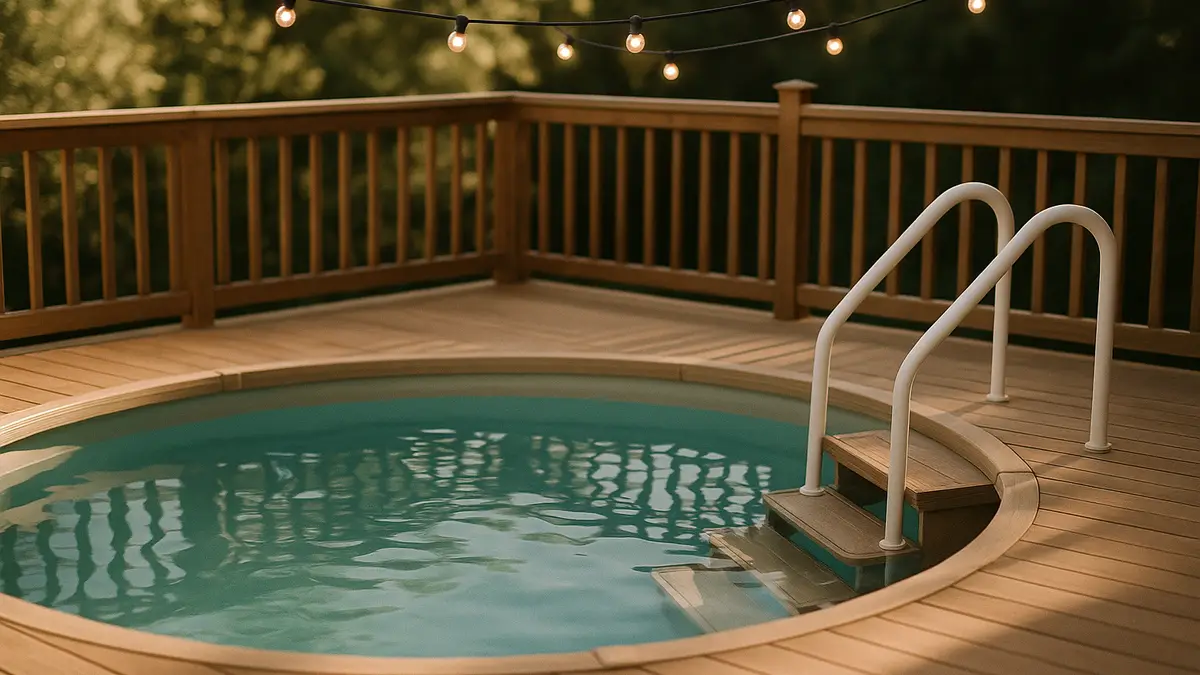
A deck turns an above-ground pool from a freestanding tank into something that looks and functions like part of the yard, but the cost range is wide enough that “add a deck” isn’t a real budget line until you pick a design.
What deck options exist for above-ground pools?
Three tiers cover almost every install. An entry platform is the smallest option, just enough decking to reach the pool wall and step in safely, usually a 4x4 or 6x6 foot platform with stairs. A partial deck extends that into a usable seating area along one side of the pool, commonly an L-shape or a single straight run. A full wraparound deck circles the entire pool, turning the whole perimeter into usable outdoor space. Each tier is a genuinely different project, not just a bigger version of the last.
What does each deck tier cost?
| Deck tier | What it covers | Typical cost |
|---|---|---|
| Entry platform | Steps and a small landing at one entry point | $1,500-$3,500 |
| Partial deck | Entry plus a seating run along one side | $3,500-$8,000 |
| Full wraparound | Decking around the entire pool perimeter | $8,000-$20,000+ |
Material choice moves the number within each tier: pressure-treated lumber sits at the low end, composite decking runs 30% to 60% more but needs far less upkeep over time. Add these figures to the $1,500 to $6,000 base cost of the pool itself; our installation cost guide covers other site-prep costs that stack on top of both.
Do you need a permit or fencing for a deck?
Most jurisdictions require a building permit once a deck crosses a height threshold, commonly around 30 inches above grade, which is exactly the height range most above-ground pool decks fall into since the pool wall itself is typically 48 to 52 inches tall. That permit review usually comes with a guardrail requirement. Separately, most pool codes require a compliant barrier around the pool, and a deck with the right railing height and a self-latching gate can often satisfy part of that requirement, but check your local code rather than assuming; our pool fence buying guide covers what most codes actually specify.
What design details matter beyond square footage?
Deck height relative to the pool wall is the first decision that shapes everything else. Most decks are built flush with or just below the pool’s top rail, so stepping from deck to water feels like one continuous surface rather than climbing over a wall. Getting that height wrong, even by a few inches, is one of the most common regrets owners mention after the fact, since it affects how natural entry and exit feel every single time you use the pool. Gate and stair placement matters for both safety and daily convenience: a single entry point is easier to secure with one self-latching gate, while multiple entry points multiply the fencing hardware you need to stay code-compliant. Railing style is mostly aesthetic but does affect cost, cable or glass railings cost meaningfully more than standard wood balusters and are worth pricing separately rather than assuming they’re included in a general deck quote. Finally, think about shade and seating from the start; adding a pergola, umbrella base, or built-in bench later is more expensive than designing the footing for it during the original build.
How does a deck change the buying decision?
A deck is one of the biggest reasons above-ground pools close the visual gap with inground pools without closing the cost gap. A full wraparound deck on a quality above-ground pool can run $10,000 to $25,000 all-in for pool plus deck, still well under the $35,000 floor for even a basic inground pool, while delivering a permanent, built-in look. If a full deck is part of your plan from the start, that changes the comparison in our inground vs above-ground guide: the gap narrows, but above-ground with a full deck still wins on cost even against the cheapest inground option. It’s worth deciding on deck scope before you even buy the pool, not after, since a pool purchased without deck plans in mind can end up sized or positioned awkwardly for the deck you add later.
What should you budget for beyond the deck itself?
Plan for railings and stairs as separate line items if your quote doesn’t already include them, since some deck quotes price decking material alone. Budget for annual maintenance too: pressure-treated lumber typically needs restaining or sealing every 2 to 3 years to hold up against constant pool splash, while composite decking needs little beyond occasional cleaning. Factor in fencing and gate hardware if your deck design doesn’t fully enclose the pool on its own, since most jurisdictions require a complete barrier, not a partial one. It’s also worth getting at least two quotes for deck construction specifically, separate from the pool installer’s quote if they’re different contractors, since deck pricing varies more by labor market and material sourcing than pool pricing does. A deck built by a general contractor familiar with pool-specific height and drainage requirements tends to hold up better than one built by a crew without that experience, even at a similar price point.
Before finalizing a deck design, it’s worth confirming above-ground is still the right call for your yard and timeline; our pool types guide lines up every option side by side, and the inground vs above-ground comparison walks through the long-term cost math in more detail.
Frequently asked questions
Quick answers to what readers ask us most
How much does a deck add to an above-ground pool?
A basic entry platform adds $1,500 to $3,500. A partial deck covering entry plus a seating area runs $3,500 to $8,000. A full wraparound deck typically adds $8,000 to $20,000 or more, depending on size and decking material.
Do you need a permit for an above-ground pool deck?
In most jurisdictions, yes, once the deck reaches a certain height or size, commonly 30 inches above grade, which triggers building code review and often a required guardrail. Check with your local building department before building, since requirements vary by city and county.
Does a deck count as pool fencing for code purposes?
Sometimes, but not automatically. Many codes accept a deck with a self-latching gate and adequate railing height as part of a compliant pool barrier, but the deck itself isn't automatically compliant. See our pool fence buying guide for what most codes actually require.
What material is best for an above-ground pool deck?
Pressure-treated lumber is the cheapest and most common choice. Composite decking costs more upfront but needs far less maintenance, no staining or sealing, and holds up better to constant splash exposure than wood over a 15-plus year timeframe.